
Hrotsvitha
Secular canoness, first female playwright of the Latin West.

Rogengy · CC BY-SA 4.0
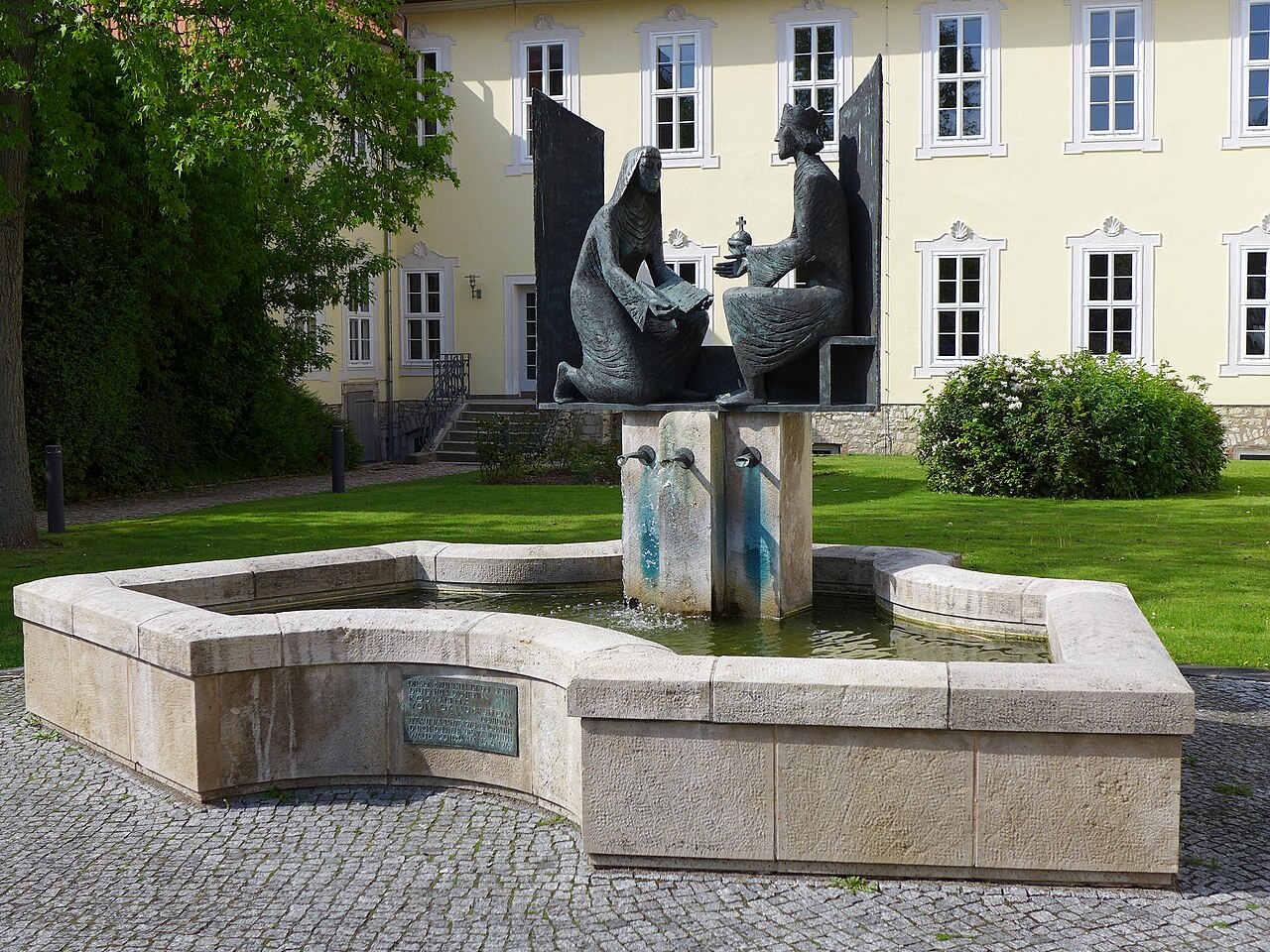
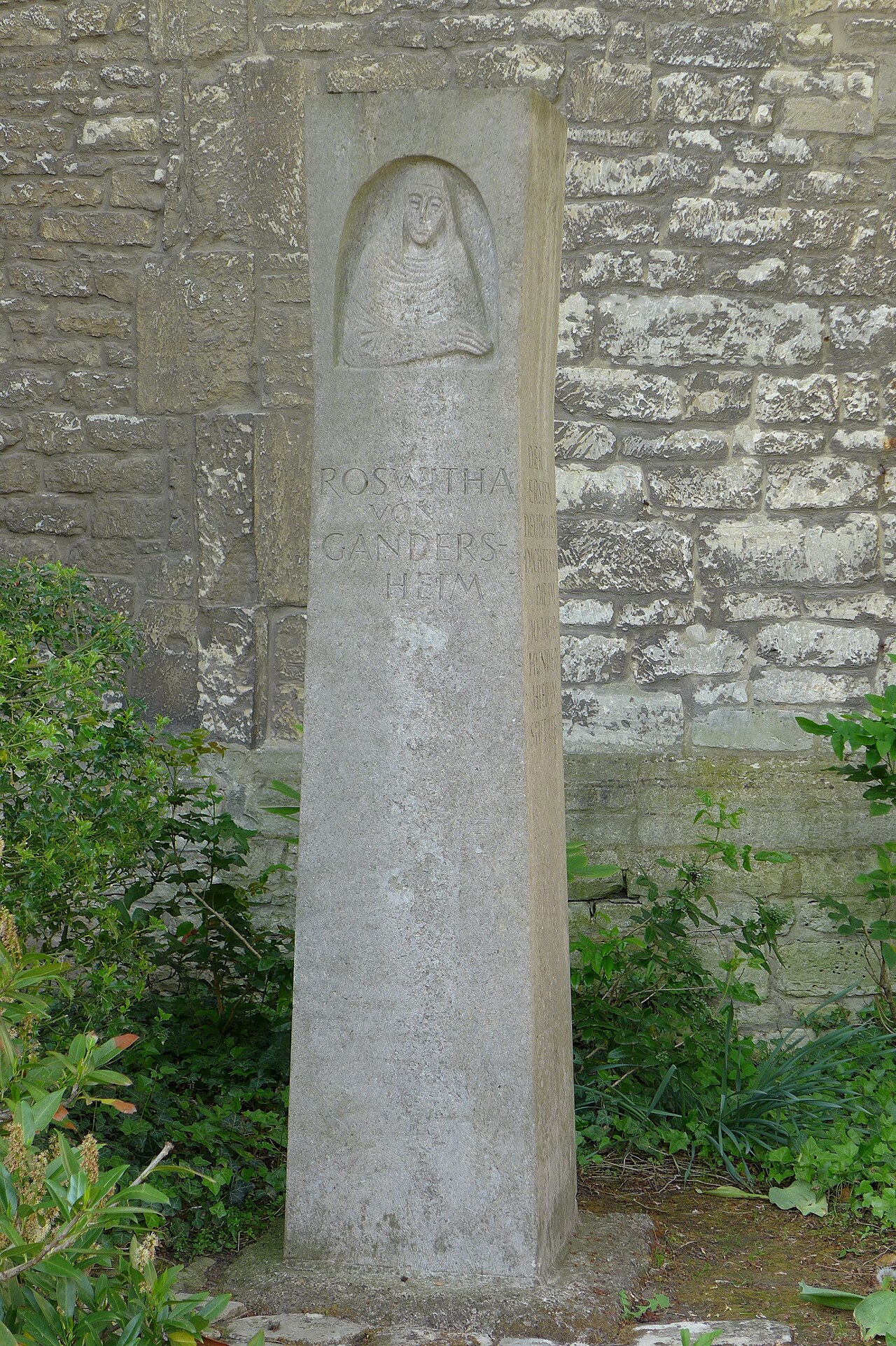
Hrotsvitha (c. She is considered the first female writer from the Germanosphere, the first person since the Fall of the Roman Empire to write dramas in the Latin West, and the first German female poet. Her six short dramas are regarded as her most important works, and she is one of the few women who wrote about her life during the early Middle Ages, making her a rare source for women's history from a woman's perspective.
- died
- 973
- field
- Drama, Christian poetry, history
- nationality
- Saxon (Germanosphere)
- known_for
- First female playwright since antiquity; six dramas; first German female poet
Lore & Background
All information about Hrotsvitha comes from the prefaces of her work and later interpretations. She was born in Bad Gandersheim to Saxon nobles and entered Gandersheim Abbey as a canoness. The abbey was a house of secular canonesses; she took vows of chastity and obedience but not poverty, and could leave at any time. She studied under the nun Rikkardis and later under Abbess Gerberga, granddaughter of King Henry the Fowler, who became her friend and adviser. Hrotsvitha became a teacher in her 20s. Her writings demonstrate a mature perspective and a good grasp of the legal system, Ottonian history, and the Islamic empire—she was the first Northern European to write about Islam. She initially wrote in secret until encouraged to read her works aloud and edit them.
Reader's Guide
Her six dramas in Liber Secundus offered a Christian alternative to the Roman playwright Terence, focusing on virtuous virgins rather than weak or immoral women. Despite her importance as the first known female playwright, her work was often omitted from histories of drama. Feminist scholars have argued that questioning the authenticity of her work reflects a sexist narrative, as multiple historical and contemporary works demonstrate its authenticity. She has been called 'the most remarkable woman of her time' and an important figure in the history of women.
Did You Know?
- Hrotsvitha's name means 'a mighty shout'.
- She was the first Northern European to write about Islam and the Islamic empire.
Life and Education at Gandersheim Abbey
Unlike monastic orders that demanded vows of poverty, the Gandersheim community required only chastity and obedience, allowing its members to retain personal wealth, leave at will, and enjoy the protection and resources of a well-stocked library. Hrotsvitha's noble birth meant she moved through this world with a degree of comfort and intellectual freedom unusual for women of the period. Her education was shaped by two key figures: the younger nun Rikkardis, who first guided her studies, and Abbess Gerberga, granddaughter of King Henry the Fowler, who became both teacher and close friend. Hrotsvitha immersed herself in the popular literature of her day, particularly hagiographic legends, and devoted considerable time to mastering verse composition. By her twenties she had transitioned from student to instructor, teaching within the abbey's walls. Her writings reveal a sophisticated command of Ottonian legal structures, dynastic succession, and even the political contours of the Islamic world, marking her as the first Northern European writer to address Islam directly.
Literary Works and Central Themes
Hrotsvitha's surviving output falls into three broad categories: legends, comedies, and dramatic plays, all composed in Medieval Latin. Her Book of Legends, written in the 950s or 960s in honor of Abbess Gerberga, contains eight narratives rendered mostly in Leonine hexameter, with one piece in rhymed distichs. Several of these, including Theophilus and Basilius, draw on the Faustian tradition of a sinner bargaining his soul with the Devil, a motif Hrotsvitha uses to dramatize the eternal struggle between virtue and corruption. Her six short dramas, collected in what is called the Book of Drama, represent her most celebrated achievement. She explicitly positioned them as a Christian counterpoint to the Roman playwright Terence, whose stories she felt portrayed women as morally weak. In Hrotsvitha's version, the central figures are virtuous virgins whose faith and perseverance under adversity embody the strength of Christian values. The Devil appears frequently across her works, characterized according to the conventions of her era, and the triumph of good over evil remains a through-line. Her name itself, meaning "a mighty shout," has been read as reflecting her desire to amplify the stories of Christian heroes and the ideals they represent.
Rediscovery and Enduring Legacy
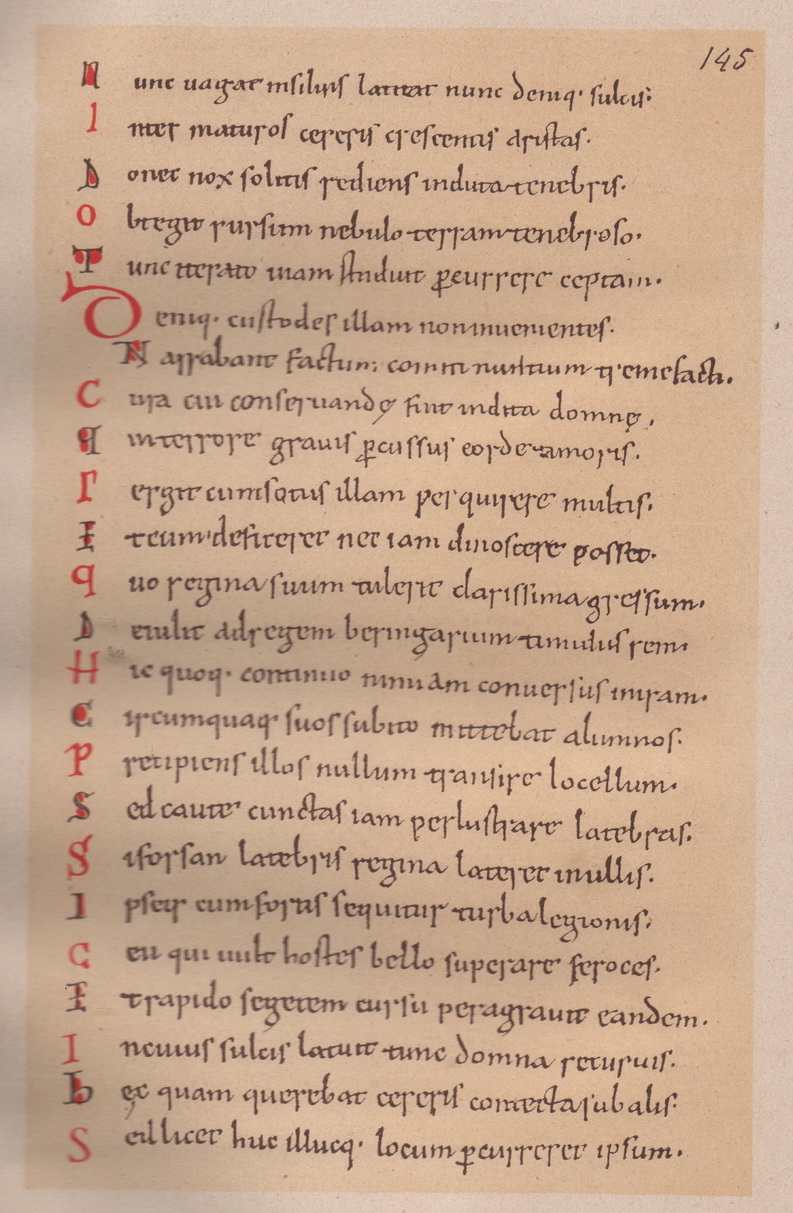
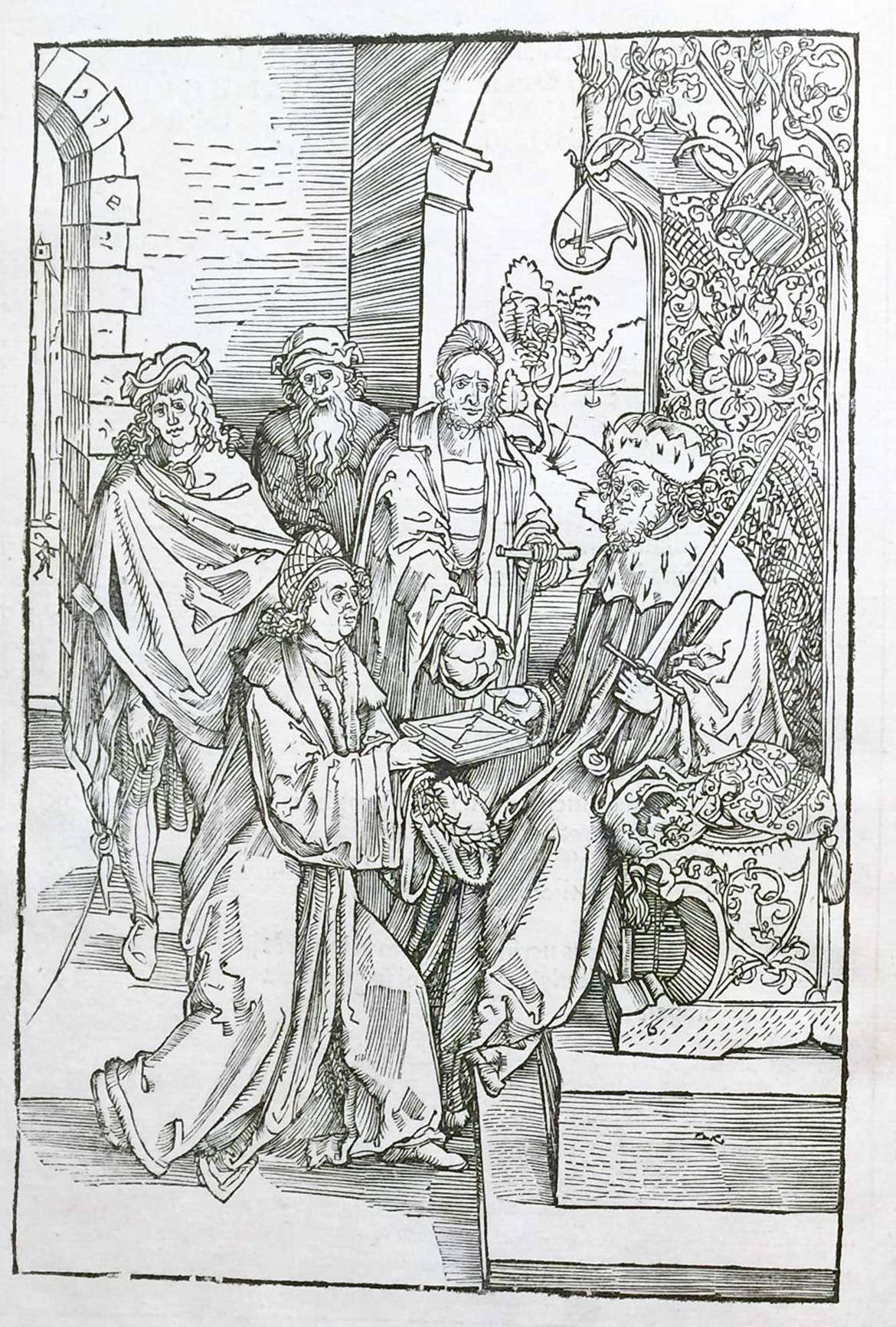
For centuries after her death around 973, Hrotsvitha's manuscripts circulated quietly within monastic libraries, largely unknown to the wider literary world. The turning point came in the late fifteenth century when the humanist Conrad Celtis located a key manuscript—the Codex held at the Bavarian State Library, written by multiple scribes in Gandersheim toward the end of the tenth or start of the eleventh century—at the Cloister of St. Emmeram in Regensburg. This discovery led to the first printed edition, famously illustrated by Albrecht Dürer. English translations did not appear until the 1600s, and even then Hrotsvitha was frequently omitted from standard histories of drama and literature, a gap that persists in some modern texts. Yet her rediscovery during the German Renaissance sparked renewed scholarly engagement, and she is now widely recognized as the first female writer from the German-speaking world, the first person since the collapse of the Roman Empire to compose stage dramas in the Latin West, and the first German woman to write poetry. Cardinal Gasquet praised her works as deserving an eminent place in medieval literature, honoring her sex, her age, and her vocation.
Authenticity and the Politics of Doubt
Despite centuries of scholarly engagement with her texts, Hrotsvitha's authorship has periodically been called into question. Feminist scholars have argued that this recurring skepticism is less a legitimate textual problem than a reflection of deeply embedded sexist assumptions: the idea that a woman in the early Middle Ages could not possibly have produced sophisticated Latin verse, drama, and historical narrative. The evidence to the contrary is substantial. Multiple contemporary and later historical sources reference her, and the manuscripts themselves—copied by several hands at Gandersheim—form a coherent body of work. Her prefaces, which are the primary source for what little biographical detail survives, speak to a woman who was educated, well-informed about Ottonian politics and law, and capable of a mature literary perspective. She is also one of the very few women of the early medieval period to have written about her own life and community, making her a rare voice documenting the history of women from a woman's point of view. The fact that individuals have engaged with her work for hundreds of years, with increasing intensity after her fifteenth-century rediscovery, stands as a powerful rebuttal to those who would dismiss her as a fabrication.
Gallery
Frequently Asked Questions
What did Hrotsvitha write?
Her most celebrated works are six short Latin dramas, accompanied by Christian poetry and historical writing. Those six plays are generally regarded as her defining contribution to medieval literature.
Why is Hrotsvitha important in literary history?
She closed a gap of roughly a thousand years by reviving dramatic writing in the Latin West after the Fall of Rome, becoming the first playwright in that tradition since the classical era. She is also one of the very few early-Medieval women who left a personal account of her own life, offering a rare female perspective on the period.
Was Hrotsvitha a nun?
No—she held the title of secular canoness, meaning she lived within a religious community but was not bound by full monastic vows. This distinction shaped both her daily existence and the context in which she composed her works.
What makes Hrotsvitha's dramas unique?
They are the first known dramatic works produced in the Latin West between the fall of the Roman Empire and the later medieval period. Written in Latin, they fuse classical theatrical structure with Christian moral themes, a combination that had no direct precedent in Western literature for close to a millennium.
More in Classical & Medieval Poets 1-24
Elsewhere in the Classical & Medieval Poets universe
Spotted an error? Know more?
This is a living reference — every entry is fact-audited, and reader corrections feed straight into our audit queue. Suggest an edit · See this site's audit record