
Ludovico Ariosto
Italian poet who authored *Orlando Furioso*.

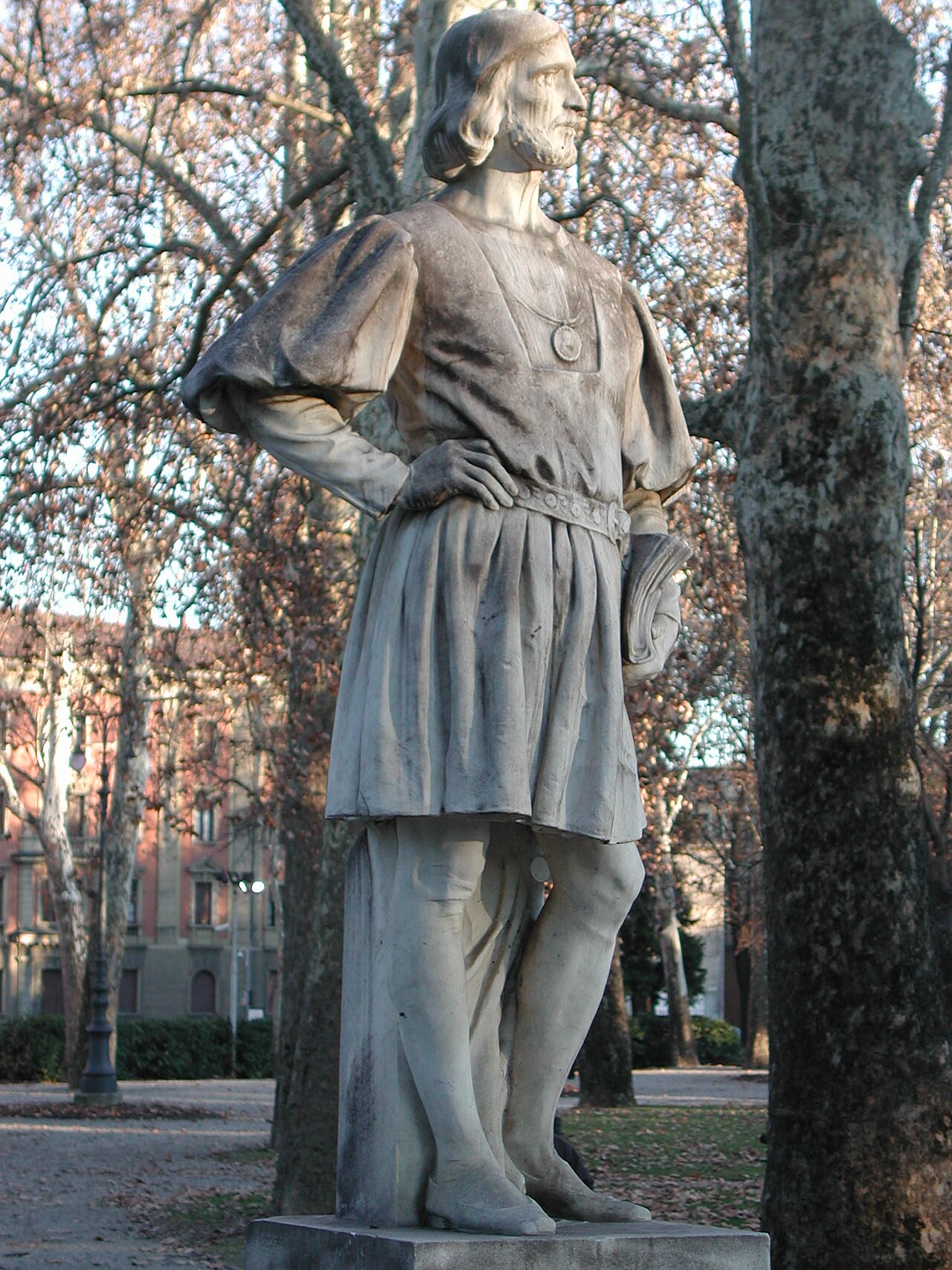
Lungoleno · CC BY-SA 2.5
Ludovico Ariosto was an Italian poet, best known as the author of the romance epic *Orlando Furioso* (1516–1532). The poem, a continuation of Matteo Maria Boiardo's *Orlando Innamorato*, describes the adventures of Charlemagne, Orlando, and the Franks as they battle against the Saracens with diversions into many sideplots. The poem is transformed into a satire of the chivalric tradition. Ariosto composed the poem in the ottava rima rhyme scheme and introduced narrative commentary throughout the work. Ariosto also coined the term "humanism" (in Italian, *umanesimo*) for choosing to focus upon the strengths and potential of humanity, rather than only upon its role as subordinate to God. This led to Renaissance humanism.
- born
- 8 September 1474, Reggio nell'Emilia
- died
- 6 July 1533
- field
- Poetry
- nationality
- Italian
- known_for
- Author of *Orlando Furioso*
Lore & Background
Ariosto was born in Reggio nell'Emilia on 8 September 1474, the oldest of 10 children, and was obliged by his father to study law for five years before being allowed to read classics under Gregorio da Spoleto. His studies were cut short when Spoleto moved to France to tutor Francesco Sforza, and shortly after, Ariosto's father died. Compelled to care for his family, he wrote comedies in prose and lyrical pieces that attracted the notice of Cardinal Ippolito d'Este, who took him under his patronage and appointed him one of the gentlemen of his household. Este compensated Ariosto poorly; the only reward he gave the poet for *Orlando Furioso*, dedicated to him, was the question, "Where did you find so many stories, Master Ludovico?" Ariosto later said the cardinal was ungrateful, that he deplored the time spent under his yoke, and that if he received some small pension, it was not to reward him for his poetry – which the prelate despised – but for acting as a messenger. After a falling-out with Cardinal d'Este in 1518, Ariosto was taken under the patronage of the cardinal's brother, Alfonso, duke of Ferrara. He had already distinguished himself as a diplomat, chiefly on the occasion of two visits to Rome as ambassador to Pope Julius II. The fatigue of one of these journeys brought on an illness from which he never recovered, and on his second mission he was nearly killed by order of the Pope, who happened at the time to be in conflict with Alfonso. He later served as governor of the province of Garfagnana for three years, where his government satisfied both the sovereign and the people; a story recounts that a bandit chief, on discovering that his captive was the author of *Orlando Furioso*, apologized for not having immediately shown him the respect due his rank.
Reader's Guide
Ariosto's significance lies primarily in his epic poem *Orlando Furioso*, which became a landmark of Italian Renaissance literature. The poem, composed in ottava rima and featuring narrative commentary, is noted for its satirical treatment of chivalric tradition and its use of a technique dubbed 'Cantus Interruptus' by scholar Daniel Javitch, where plot lines are broken off mid-canto and resumed much later, undermining the reader's desire for continuity. Javitch argues Ariosto does this to undermine "man's foolish but persistent desire for continuity and completion." The first version of *Orlando Furioso* in 40 cantos was published at Ferrara in 1516. The third and final version, in 46 cantos, appeared on 8 September 1532. According to Goethe, the work is "a graceful smiling fantastic creation."
His work had lasting cultural impact: Lord Byron called Walter Scott "The Ariosto of the North" and Ariosto "The southern Scott" in his poem *Childe Harold's Pilgrimage*, Canto the Fourth (1818). Ariosto's language is characterized by serenity and brilliance, with a wry humor often called the 'Sorriso ariostesco'. Thomas Greene, in *Descent from Heaven*, says: "The two persistent qualities of Ariosto's language are first, serenity – the evenness and self-contented assurance with which it urbanely flows, and second, brilliance – the Mediterranean glitter and sheen which neither dazzle nor obscure but confer on every object its precise outline and glinting surface."
Did You Know?
- Ariosto coined the term 'humanism' (in Italian, *umanesimo*) for focusing on the strengths and potential of humanity rather than only its role as subordinate to God.
- The only reward Cardinal Ippolito d'Este gave Ariosto for *Orlando Furioso* was the question: 'Where did you find so many stories, Master Ludovico?'
- Ariosto's play *I suppositi* was used by Shakespeare as a source for *The Taming of the Shrew*.
- On a diplomatic mission to Pope Julius II, Ariosto was nearly killed by order of the Pope, who was in conflict with Duke Alfonso of Ferrara.
- A bandit chief once apologized to Ariosto for not showing him due respect upon discovering his captive was the author of *Orlando Furioso*.
Patronage and Courtly Life
Ariosto's professional trajectory was defined by his fraught relationships with powerful patrons. After his father Niccolò died, the poet was compelled to abandon his literary pursuits and manage his family's disarrayed affairs. Despite these obligations, he produced comedies in prose and lyrical works that caught the eye of Cardinal Ippolito d'Este, who placed him in his household as one of the gentlemen. The arrangement was far from generous — Ariosto was paid poorly, and when he dedicated *Orlando Furioso* to the cardinal, the only response was a dismissive quip: "Where did you find so many stories, Master Ludovico?" Ariosto later described the cardinal as ungrateful and said he deplored the years spent under his yoke, adding that if he received some small pension, it was not to reward him for his poetry – which the prelate despised – but for acting as a messenger. In 1518, when Ippolito traveled to Hungary and demanded Ariosto accompany him, the poet refused, citing ill health, his love of study, and the need to care for his elderly mother. The cardinal was furious, denied him even an interview, and after a heated argument, Ariosto was promptly dismissed from service. He then found refuge under the patronage of Ippolito's brother, Duke Alfonso of Ferrara, who recognized his diplomatic talents from two earlier ambassadorial missions to Pope Julius II. Ludovico Ariosto and Leonardo da Vinci shared a patron in Cardinal Ippolito d'Este's older sister the Marchioness Isabella d'Este, the "First Lady of the Renaissance." Isabella d'Este appears in Ludovico's masterpiece, *Orlando Furioso*, and also in Leonardo's *Sketch for a Portrait of Isabella d'Este* at the Louvre.
Orlando Furioso and Narrative Technique
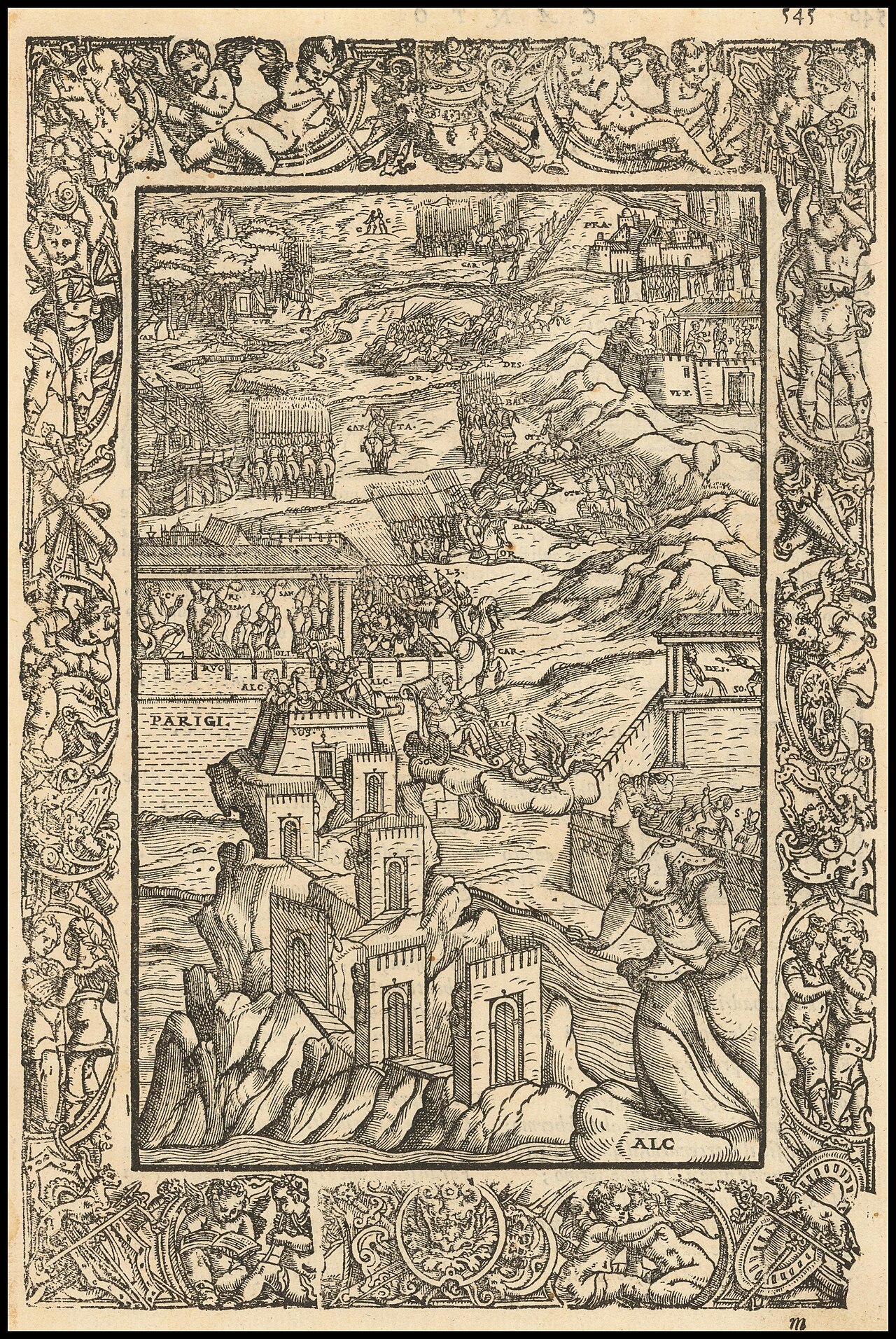
The crowning achievement of Ariosto's career was *Orlando Furioso*, a romance epic that continued the unfinished *Orlando Innamorato* by Matteo Maria Boiardo. The poem chronicles the adventures of Charlemagne, Orlando, and the Franks in their battles against the Saracens, while weaving in numerous sideplots. Composed in the ottava rima rhyme scheme, the work transforms the chivalric tradition into something closer to satire. The first edition appeared in Ferrara in 1516 with 40 cantos; the final version, expanded to 46 cantos, was published on 8 September 1532. A distinctive feature of Ariosto's technique, which scholar Daniel Javitch terms "Cantus Interruptus," involves the narrator breaking off one storyline mid-canto and resuming it much later. Rather than building suspense, this method defuses narrative tension — by the time a plot thread returns, the reader has often forgotten it or become absorbed in another. Javitch argues Ariosto uses this to undermine "man's foolish but persistent desire for continuity and completion." For example, in Canto II, stanza 30, of *Orlando Furioso*, the narrator says: "But I, who still must follow the long way / Of my long poem, must now leave this tale / And turn to other matters for a while." Some have attributed this piece of metafiction as one component of the "Sorriso ariostesco" or Ariosto's smile, the wry sense of humor that Ariosto adds to the text.
Humanism and Lasting Influence
Beyond his poetry, Ariosto made a conceptual contribution that would echo through centuries. He is credited with coining the Italian term "umanesimo" — humanism — to describe a philosophical orientation that emphasized the strengths and potential of human beings rather than viewing them solely as subordinate to God. This formulation helped lay the groundwork for what we now call Renaissance humanism. His literary influence also stretched well beyond Italy. Shakespeare drew upon it as a source for *The Taming of the Shrew*. Goethe, writing much later, described *Orlando Furioso* as "a graceful smiling fantastic creation." The Marchioness Isabella d'Este, sister of Cardinal Ippolito and a patron shared with Leonardo da Vinci, even appears as a figure within the epic itself, linking Ariosto's world to the broader artistic circles of the Italian Renaissance. In his poem *Childe Harold's Pilgrimage*, Canto the Fourth (1818), Lord Byron described poet and novelist Walter Scott as "The Ariosto of the North", and Ariosto as "The southern Scott", connecting Ariosto and the Italian Renaissance with early-nineteenth century Scottish and British Romantic writing.
Early Life and the Road to Letters
Ludovico Ariosto was born on 8 September 1474 in Reggio nell'Emilia, the eldest of 10 children in a family of modest but respectable standing. His father Niccolò served as commander of the local citadel, and young Ludovico was expected to inherit the patriarchal position. From his earliest years, however, the boy showed a deep fascination with poetry — an inclination his father resisted, compelling him to spend five years studying law. Only after that period was he permitted to read the classical texts under the guidance of Gregorio da Spoleto, a teacher of Greek and Latin literature. These studies were cut short when Spoleto departed for France to tutor Francesco Sforza, and soon after, Ariosto's father died. The loss thrust the young man into the role of family head, forcing him to set aside his literary ambitions and manage a household whose affairs had fallen into disarray. Even under these pressures, he found time to write prose comedies and lyrical pieces, which would eventually attract the attention of a powerful cardinal and set his career in motion.
Gallery
Frequently Asked Questions
Who is Ludovico Ariosto?
Ludovico Ariosto was an Italian Renaissance poet born in Reggio nell'Emilia in 1474. He is best remembered for authoring the sprawling romance epic Orlando Furioso, which became one of the defining works of Italian literature.
What is Orlando Furioso about?
The poem follows the Frankish knights under Charlemagne as they clash with Saracen forces, but it constantly veers into tangled love stories, magical quests, and comic misadventures. Rather than simply celebrating chivalry, Ariosto uses the narrative to gently mock and question the ideals of the knightly tradition.
How does Ariosto connect to Boiardo's Orlando Innamorato?
Ariosto's epic was conceived as a continuation of Matteo Maria Boiardo's unfinished Orlando Innamorato, picking up the story of Orlando's love for Angelica. He expanded the scope dramatically, adding dozens of new characters, subplots, and a far more satirical tone than his predecessor.
Why is Ariosto considered important in literary history?
His work sits at the crossroads of medieval romance and Renaissance humanism, celebrating human ingenuity and emotional complexity even as it pokes fun at outdated chivalric codes. The poem's intricate structure and witty voice influenced generations of writers, from Rabelais to Cervantes.
When did Ludovico Ariosto live?
He was born on 8 September 1474 in Reggio nell'Emilia and died on 6 July 1533. His active period as a poet and courtier spanned the early sixteenth century, with Orlando Furioso first published in 1516 and revised through 1532.
More in Classical & Medieval Poets 25-28
Elsewhere in the Classical & Medieval Poets universe
Spotted an error? Know more?
This is a living reference — every entry is fact-audited, and reader corrections feed straight into our audit queue. Suggest an edit · See this site's audit record