
Gottfried von Strassburg
Author of the Middle High German romance *Tristan*.

CEphoto, Uwe Aranas · CC BY-SA 3.0
Gottfried von Strassburg (died c. His work is regarded, alongside the *Nibelungenlied* and Wolfram von Eschenbach's *Parzival*, as one of the great narrative masterpieces of the German Middle Ages. He is probably also the composer of a small number of surviving lyrics.
- field
- Poetry, courtly romance
- nationality
- German (Strasbourg)
- known_for
- Author of the Middle High German romance *Tristan*
Lore & Background
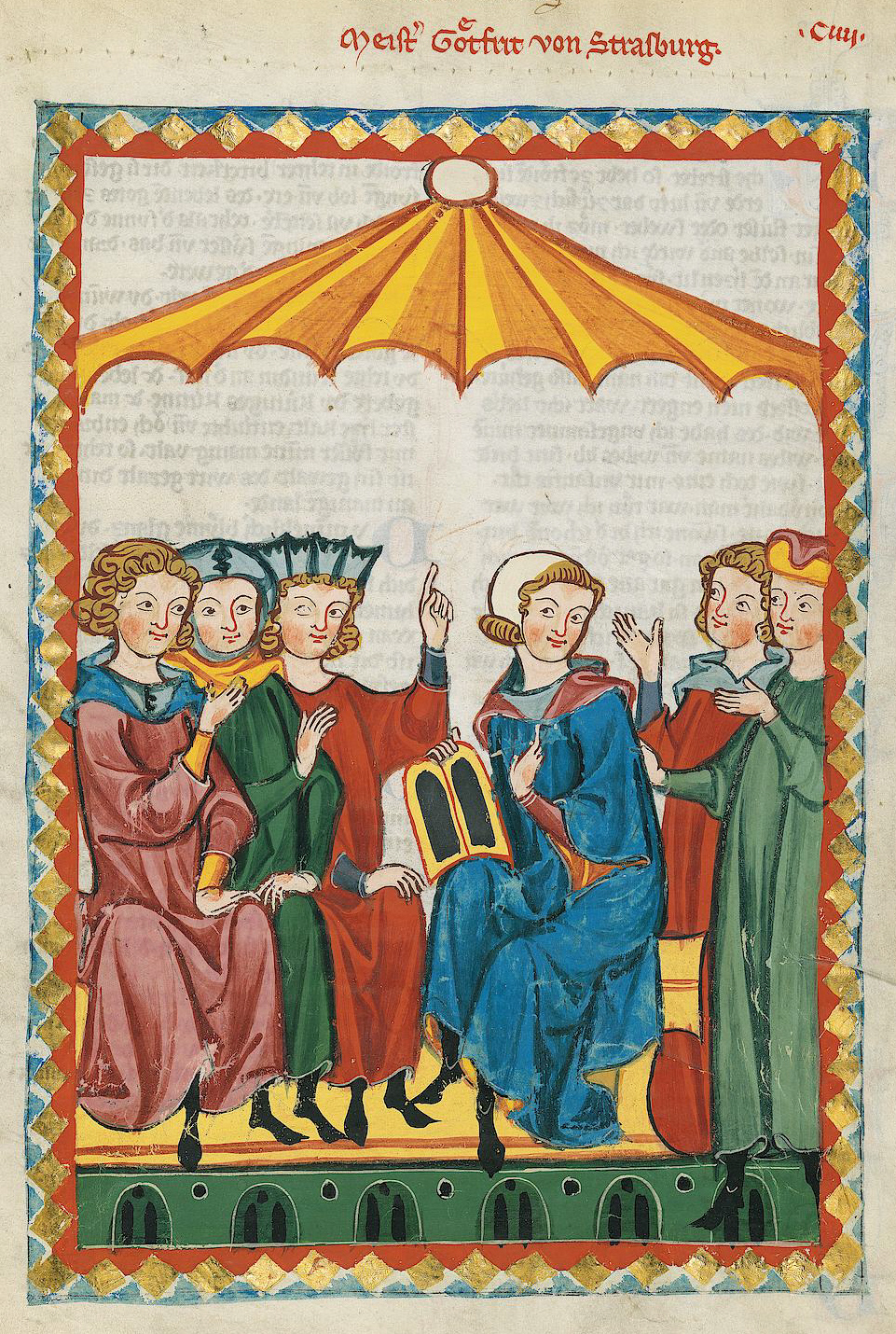
Other than an origin in or close association with Strasbourg, nothing is known of his life. It would seem, however, that he was a man of good birth and position, who filled an important municipal office in his native city of Strasbourg, but since he is always referred to in German as *Meister* (master) and not *Herr* (sir), it seems safe to assume he was not a knight. *Tristan* ends abruptly, and according to the testimony of Ulrich von Türheim and Heinrich von Freiberg, two people who provided endings for *Tristan*, Gottfried died before finishing the work. His thorough familiarity with Latin literature and rhetorical theory suggest someone who had enjoyed a high level of monastic education. He also shows detailed technical knowledge of music and hunting, far beyond anything found in the works of his contemporaries. Gottfried draws more on the learned tradition of medieval humanism than on the chivalric ethos shared by his major literary contemporaries. He also appears to have been influenced by the writings of contemporary Christian mystics, in particular Bernard of Clairvaux. That his home was in Strasbourg is supported by the fact that the earliest manuscripts of *Tristan*, dating from the first half of the 13th century, show features of Alemannic and specifically Alsatian dialect.
Reader's Guide
Gottfried von Strassburg's significance rests primarily on his unfinished romance *Tristan*, a work that stands alongside the *Nibelungenlied* and Wolfram von Eschenbach's *Parzival* as a masterpiece of the German Middle Ages. His rhetorical style is very distinct among his contemporaries, marked by complex symmetrical structure, detailed word and sound patterns, and skillful use of irony for both humorous and tragic effects. While his statement of reliance on Thomas is correct, he both expanded on his source and refined the story psychologically.
Did You Know?
- Gottfried is referred to as *Meister* (master) and not *Herr* (sir), suggesting he was not a knight.
- The initial letters of quatrains in the poem form an acrostic with the names Gotefrid-Tristan-Isolde.
- The prologue's quatrains give the name Dieterich, assumed to be the name of Gottfried's patron.
- Gottfried shows detailed technical knowledge of music and hunting, far beyond his contemporaries.
Gallery


Frequently Asked Questions
What is Gottfried von Strassburg's most famous work?
His surviving masterpiece is a verse retelling of the Tristan and Iseult legend composed in Middle High German. It is traditionally placed alongside the Nibelungenlied and Wolfram von Eschenbach's Parzival as one of the three great narrative poems of that era.
Why is Gottfried von Strassburg's Tristan considered important?
It is widely regarded as a pinnacle of medieval German narrative poetry, prized for its emotional depth and formal craftsmanship. Scholars and readers alike hold it up as a defining work of the courtly-romance genre in the German-speaking world.
Did Gottfried von Strassburg write anything besides the Tristan romance?
A handful of short lyric poems are attributed to him, though their authorship is not always certain. These minor verses are the only other pieces of writing generally linked to his name in the surviving manuscript tradition.
More in Classical & Medieval Poets 1-24
Elsewhere in the Classical & Medieval Poets universe
Spotted an error? Know more?
This is a living reference — every entry is fact-audited, and reader corrections feed straight into our audit queue. Suggest an edit · See this site's audit record