
Lu You
Southern Song poet and historian known for patriotic verse.
Lu You (1125–1210) was a Chinese historian and poet of the Southern Song Dynasty, renowned for his patriotic verse that reflects a lifelong commitment to expelling the Jurchen invaders from northern China and reunifying the country under Song rule. Born on a boat in the Wei River during a rainy dawn on November 13, 1125, he entered a world already fractured by the Jin–Song wars, with the Northern Song collapsing within a year of his birth. His family, which included government officials, fled south, and he was raised with a strong sense of patriotism, determined from youth to drive out the foreign Jurchen. At age twelve, he excelled in writing, sword fighting, and war strategy. He married his cousin Tang Wan at twenty, but his mother forced a divorce due to their childlessness and her disapproval, a separation that haunted him. Eight years later, he encountered Tang Wan and her new husband at Shen’s Garden; she offered him wine, and he wrote the poem “Phoenix Hairpin” on the wall in heartbreak. She responded in kind and died within a year. Lu You later remarried a woman from the Wang clan. His official career was rocky: after failing the civil exam at nineteen, he passed ten years later, winning first place in the Lin An region, which angered Qin Sun, grandson of the powerful Qin Hui. This led to Lu You’s exclusion from further advancement until Qin Hui’s death. He then served in government but was dismissed for his ardent anti-Jin stance. In 1172, he worked in military strategy, which inspired many patriotic poems, but the corrupt Song court offered no real opportunity. He later joined Fan Chengda’s party in 1175, adopting the art name “Fangweng” (Liberated Old Man) as he grew self-indulgent in drink. After repeated promotions and demotions, he retired in 1190 to Shaoxing, where he lived in seclusion for twenty years, maintaining good health on a diet of pearl barley and wood ear mushrooms. His wife died in 1197, and he died on January 26, 1210, at age eighty-six, lamenting that northern China remained under foreign control. He left behind roughly eleven thousand poems in shi and ci forms, plus prose works.
- known_for
- Patriotic poems, debated love story with Tang Wan, over 11,000 poems
Lore & Background
Lu You was a Chinese historian and poet of the Southern Song Dynasty, born on a boat in the Wei River during a rainy morning in 1125. He lived until 1210, spending his final years in seclusion in his hometown of Shaoxing, then a rural area in what is now Zhejiang province. His defining characteristics include a deep, lifelong patriotism shaped by the political turmoil of his era: at his birth, northern China had been invaded by the Jurchens of the Jin dynasty, and the Southern Song held only the south. This division and the threat of invasion defined his life and work. He was known for his many patriotic poems, and his official career was marked by his ardent, irredentist stance advocating the expulsion of the Jurchen and reunification of China—a position that put him out of step with the corrupt and indolent officialdom of his time, leading to repeated dismissals and demotions. His personal life was similarly marked by loss: his first marriage to his cousin Tang Wan ended in forced divorce due to his mother’s disapproval and their lack of children, a separation that haunted him and inspired famous poems, including “Phoenix Hairpin” written after a chance encounter with her years later. He later remarried a woman from the Wang clan. Lu You was an exceptionally prolific writer, composing about eleven thousand poems in both shi and ci forms, along with numerous prose works. He also mastered sword fighting and war strategy in his youth, and after a period of military service in 1172, he wrote unrestrained, passionate poems expressing his patriotic fervor. In his later years, he adopted the art name “Fangweng,” meaning “Liberated Old Man,” and became self-indulgent, drinking to forget his lack of success. He died at age 86, his great regret being that northern China remained under foreign control.
Reader's Guide
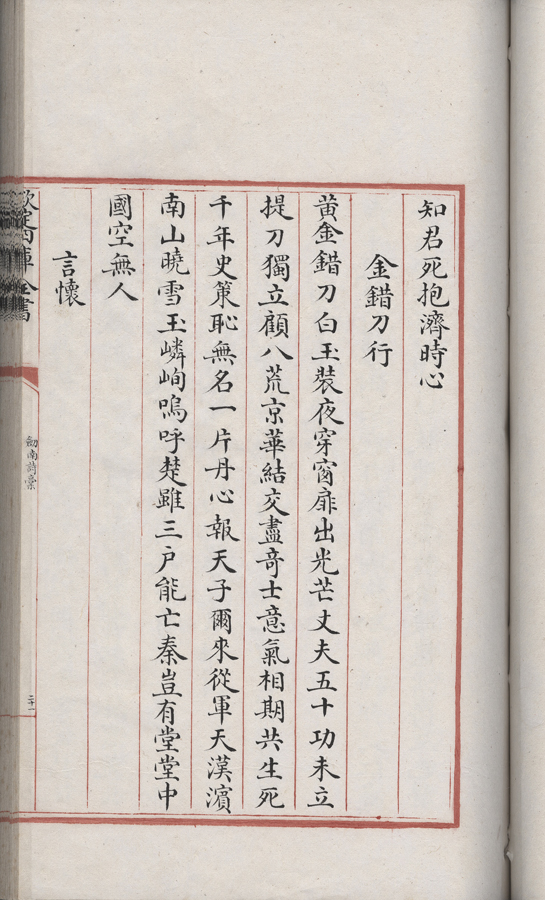
His early poems (to age 46) were largely destroyed; his middle period (ages 46–54) reflects military experience; his final period (retirement to death) includes 6,500 poems blending pastoral imagery with desolation. His poem 'To My Son,' composed near death, expresses regret that China remained divided. His advocacy for reconquest cost him his official career, but his poetry has been valued for nearly a thousand years.
Did You Know?
- His early poems (up to age 46) were largely destroyed by him.
- His poem 'To My Son,' composed near death, expresses regret that China remained divided.
- He also wrote historical works such as 'Book of Southern Tang' and prose collections.
Gallery
Frequently Asked Questions
Who is Lu You?
Lu You was a Southern Song Dynasty poet and historian who lived from 1125 to 1210. He is best remembered for his vast body of patriotic verse expressing his longing to drive the Jurchen invaders out of northern China.
How many poems did Lu You write?
Lu You left behind more than 11,000 poems, making him one of the most prolific poets in Chinese literary history. This extraordinary output reflects his lifelong commitment to writing as both personal expression and patriotic statement.
What is the famous love story involving Lu You and Tang Wan?
The tale of Lu You's first wife Tang Wan is one of the most well-known romance narratives in Chinese literature, though its historical accuracy remains debated among scholars. The story traditionally portrays a tragic separation forced by family opposition, but details vary significantly across versions.
What is the central theme of Lu You's poetry?
His work is dominated by patriotic sentiment, particularly his persistent wish to see the Song dynasty reclaim the northern territories lost to the Jurchen. Even in his later years, his verses continued to call for national reunification.
When and where was Lu You born?
Lu You was born in 1125, though the exact date and place remain uncertain—some accounts place his birth aboard a boat on the Huai River, while others suggest the town of Shanyin. He passed away on the 26th day of the 12th lunar month in 1210.
More in Classical & Medieval Poets 1-24
Related in Classical & Medieval Poets
Links follow this subject's own source article.
Spotted an error? Know more?
This is a living reference — every entry is fact-audited, and reader corrections feed straight into our audit queue. Suggest an edit · See this site's audit record